 Massachusetts DUI Lawyer Blog
True field sobriety tests are commonly referred to as divided attention tests. Their purpose is to see whether or not you can pay attention to some very basic rules while performing a simple physical task. If you have no physical limitations the tests assume that you can follow the directions and complete the test. If you are impaired the test will not be so easy to complete satisfactorily. True field sobriety tests are standardized and explained later in this post. However over the last twenty or so years Massachusetts police officer have become somewhat tricky in terms of how they administer field sobriety tests. They administer tests that are unreasonable and not approved by professional authorities. These tests are often developed by creative police officers who have no regard for proper “objective” procedures. In Massachusetts an experienced OUI defense lawyer will exploit the officer’s unfair actions. He will show the jury that the police officer’s conduct is unjust. The result is often an acquittal.
Articles Posted in Field Sobriety Tests
What You Should Know About Field Sobriety Tests in Massachusetts


Just about every OUI case that we handle in some way implicates the field sobriety tests. Most people know a little bit about these tests. Or, at least they think they do. Sometimes you see these being administered on the side of the road. Other times your friends who have been arrested for DUI tell you about their experiences taking these tests. You see them in the movies or on Internet videos, through Facebook, Google+ or YouTube. What you don’t know is that most of these tests are inadmissible in court. They lack scientific reliability. They are not probative of guilt and should never be mentioned in front of a jury. A good, experienced drunk driving defense lawyer is aware of this and will prevent the prosecutor from getting into this evidence at trial.
What Field Sobriety Tests are Used in Massachusetts?
This is a great question. Police officers attempt to administer about six separate tests in Massachusetts. In no particular order these are the horizontal gaze nystagmus (HGN) test, the walk and turn test, the alphabet test, the one-legged stand test, the finger to nose test and the counting test. The HGN test requires a police officer to observe the eyes of a suspect while the person follows a slow moving object with his eyes horizontally. The officer looks for certain reactions in the eyes that, if shown, can demonstrate alcohol impairment. The walk and turn test requires the suspect to walk nine steps, heel to toe, turn on one foot after the ninth step and repeat the process in the other direction. The one-legged stand test has the subject stand on one leg while holding the other leg six inches off of the ground for thirty seconds. The alphabet test and counting test are administered in several ways. The suspect can be asked to recite the entire alphabet or portions thereof. For example, he might be asked to start at “h” and end at “q”. The counting test is conducted similarly and may require the subject to count backwards. The finger to nose test asks the person to close his eyes and touch an area of the nose with one finger.
What Field Sobriety Tests Are Admissible in Massachusetts Courts?
The National Highway Transportation Safety Administration (NHTSA) has approved three field sobriety tests for use in court; the HGN test, the walk and turn test and the one-legged stand test. In order for the HGN test to be admissible in Massachusetts courts the prosecution must show that the test is reliable and that it was properly administered by someone qualified to do so. In other words, there must be expert testimony to support the admission of that evidence. The district attorney in this state is never able to do so. For reasons stated in the Massachusetts case of Commonwealth v. Sands, 424 Mass. 184 (1997), testimony relating to the HGN test is almost always excluded.
The alphabet test, the counting test and the finger to nose test are not approved in the NHTSA protocol. Accordingly, it is the best practice for Massachusetts criminal defense lawyers to move for the exclusion of this evidence; unless of course the tests were performed satisfactorily.
So that leaves only the walk and turn test and the one-legged stand test as admissible in Massachusetts. However, these are not usually given correctly and are subject to attack by the defense. The NHTSA has listed eight indicators of impairment that the police should look for when administering the walk and turn test and four for the one-legged stand test. I have never had a trial where the officer could list each indicator for each test thereby making his testimony on this subject very vulnerable to attack.
Do I Have to Take the Field Sobriety Tests if I Am Pulled Over in Massachusetts?
Absolutely not. Your refusal to take field sobriety tests in Massachusetts cannot be used against you at trial at all. As with a breathalyzer refusal, the prosecution cannot even mention it. Keep in mind that without field sobriety tests and without breathalyzer tests the only thing the prosecution typically relies on while prosecuting you is the subjective observations of the police officers. If you are properly represented a conviction becomes difficult if this is all the district attorney can use at trial.
Massachusetts OUI Conviction Reversed Due to Improper Instruction on Refusal to Take Breathalyzer Test
Today, in the case of Commonwealth v. Gibson, 11-P-1107, the Massachusetts Appeals Court reversed an OUI conviction. The Court in Gibson reported the following facts:
In February of 2010, the defendant went to a couple of Super Bowl parties to watch the New Orleans play the Colts. In total Gibson drank four beers. Around 10:00 p.m. he started to drive home. He approached a red light. He waited for several seconds, became impatient, looked both ways and drove through the red light. He was pulled over. The investigating officer testified that he exhibited symptoms of alcohol impairment. Field Sobriety Tests were administered. Gibson failed each one of these tests. Consequently he was arrested. He never took the Breathalyzer Test. He was charged with OUI. During the deliberation process the jurors had a question about the absence of Breathalyzer Test evidence. Among other things, the judge told the jury that “a person does not have to take [the breathalyzer test]”. Gibson was convicted of OUI and appealed. In reversing the jury’s verdict, the Massachusetts Appeals Court ruled that those words in response to the jury’s question constitute improper on a defendant’s right against self-incrimination. The error being one of constitutional magnitude required reversal of the OUI conviction.
Read Case:
Commonwealth v. Gibson, 11-P-1107
Massachusetts OUI Defense Law Firm
Drunk Driving Defense Attorney in Massachusetts
In Massachusetts the law is well settled that a person’s refusal to take a Breathalyzer Test and/or Field Sobriety Tests cannot be used against him at trial. Such evidence is inadmissible in that it violates a person’s right against self-incrimination. However, Massachusetts Courts have reasoned that since the general public is well aware of the existence of Breathalyzer Tests in OUI Cases there should be a limiting instruction addressing the issue, provided the defendant requests the instruction. That instruction prohibits reference to a defendant’s legal right to refuse the Breathalyzer Test. Here, the instruction given by the judge violated that prohibition.
Now usually a case will not be reversed where the defense attorney did not object to the error. The Massachusetts Appellate Courts often deem the attorney’s silence as strategic. Deference is given to a lawyers’ trial tactics unless his performance is deemed ineffective. The Court in Gibson did not find the lawyer’s actions to meet that standard. Rather, the Court found that the failure to object coupled with the improper instruction created a substantial risk of a miscarriage of justice warranting a reversal of the conviction. In more simplistic terms, the Court believed there is “a serious doubt whether the result of the trial might have been different had the error not been made”. Gibson’s Massachusetts Criminal Appeals Lawyer recognized this and by doing so was able to get his conviction reversed and to secure him a new trial.
United States Supreme Court Case Has Positive Implications For Massachusetts OUI Trials
On June 23, 2011, the United States Supreme Court decided Bullcoming v. New Mexico, a case which shores up our constitutional safeguards and which will have important implications in Massachusetts OUI/DUI/DWI/drunk driving cases.
The facts, which were summarized in a previous blog post, were as follows: In 2005, Donald Bullcoming rear-ended a truck in New Mexico. The driver of the truck noticed that Bullcoming’s eyes were blood shot and smelled alcohol on him, and he told his wife to call the police. Bullcoming left before the police arrived but was apprehended shortly thereafter. He failed field sobriety tests and was arrested for a violation of the New Mexico drunk-driving statute. Bullcoming refused to take a breath test, but a sample of his blood was drawn at a hospital pursuant to a warrant obtained by police. The sample was sent to the New Mexico Department of Health for blood alcohol concentration analysis. Such analysis involved operation of gas chromatograph machines and various steps susceptible to human error. The scientist who performed the test and signed the certification reported that Bullcoming had a BAC of .21, and Bullcoming was prosecuted for the more serious crime of aggravated DWI. At a trial by jury, the State introduced the findings as a business record during the testimony of a scientist who did not observe or review the test. Bullcoming appealed to the New Mexico Supreme Court, which, considering Melendez–Diaz, acknowledged that the report was testimonial but concluded that admission of the report was constitutional because (1) the certifying scientist was a “mere scrivener” and (2) the testifying scientist was a qualified analyst capable of serving as a surrogate.
The question presented in Bullcoming, then, was whether the prosecution can constitutionally introduce a lab report, having a testimonial certification and made to prove a fact, through surrogate in-court testimony of a forensic scientist who neither signed the certification nor performed the test. In a 5-4 decision, the Supreme Court reversed the judgment of the New Mexico Supreme Court, holding that the Confrontation Clause does not permit such surrogate testimony. The accused has a right to be confronted with the certifying analyst, unless the analyst is unavailable and the accused has had an opportunity to cross examine that analyst before trial. Justice Ginsburg delivered the opinion of the Court. Justice Scalia joined the opinion in full. Justices Sotomayor and Kagan joined all but Part IV, and Justice Thomas joined all but Part IV and footnote 6.
Justice Kennedy, along with Justice Alito, Justice Breyer, and Chief Justice Roberts dissented. Much of the dissent expressed a continuing gripe concerning the Crawford line of decisions, of which Bullcoming is now a part.
Lawrence Massachusetts Woman Held On High Bail After Being Charged With Two Counts Of Motor Vehicle Homicide, OUI
Shayna Fernandez admitted to drinking her last beer as late as 4:30 in the morning this past Saturday. Just over two hours later she was involved in an accident on Route 93 in Andover. As a result of that accident two people died and one was injured. According to reports Fernandez had recently dropped a friend off in Lowell. She ended up on Route 93 northbound. Witnesses have indicated that she might have been driving as fast as ninety miles per hour in the far left lane when she hit a car being driven by a sixty two year old Saugus man. The victim’s car rolled over. The driver and one of his passengers were killed and a third man survived with injuries. Fernandez failed Field Sobriety Tests at the scene. She took a Breathalyzer Test and blew a .145, nearly two times the legal limit. Bail was set at fifty thousand dollars cash. The case will likely be prosecuted in the Salem Superior Court even though the district courts have jurisdiction over the charges. Fernandez is being charged with two counts of Motor Vehicle Homicide, Negligent Operation, OUI and assorted Criminal Motor Vehicle Offenses. A conviction for these crimes will likely result in a state prison sentence for Fernandez.

Read Articles:
http://www.eagletribune.com/local/x1814654783/Lawrence-woman-held-on-50K-after-double-fatal-crash
Massachusetts Motor Vehicle Homicide Defense Lawyer
Any Massachusetts Criminal Defense Lawyer will tell you there is no up side to taking a Breathalyzer Test, and in most instances the same sentiment applies to Field Sobriety Tests. Fernandez’s problems defending this case will no doubt be compounded by the negative results generated by these tests. Jurors rarely acquit where high readings are involved. Eyewitness testimony about the rate of speed at which she was traveling was sufficiently damaging to her defense particularly in a case where death resulted. An accident reconstruction will likely be performed by the state police, possibly supporting the eyewitness’ observations. Driving ninety miles per hour with the death of innocent people resulting, will, in and of itself trigger a criminal prosecution. A suspicion of alcohol ingestion or intoxication magnifies the problem. However, failed tests validate the subjective findings of the police and make defending this case extremely difficult. It is important to remember that in Massachusetts the prosecutor cannot mention to a jury that a defendant refused to take a breathalyzer test. Nor can the district attorney comment on a failure to attempt to perform field sobriety tests. What they can do is take the results of these tests, if taken, and use them to support their prosecution. It is much easier to defend someone who has not taken these tests.
Drunk Driving Booking And Cruiser Videos Can Be Useful In Defending OUI Cases
It’s no secret that police often write OUI police reports generically, using a laundry list of common OUI symptoms relating to physical appearance, driving, and field sobriety testing. Sometimes these reports are essentially templates in which a select few facts are unique to the defendant. The fictional on-size-fits-all OUI suspect almost always has the same characteristics: “a strong odor of alcohol,” “red watery eyes,” “slurred speech,” an “unsteady gait,” etc.
Obviously then, it is not unusual for these reports to contain false information and exaggerations. Because of this, booking videos and in-car cruiser camera videos can be an invaluable source of exculpatory evidence.
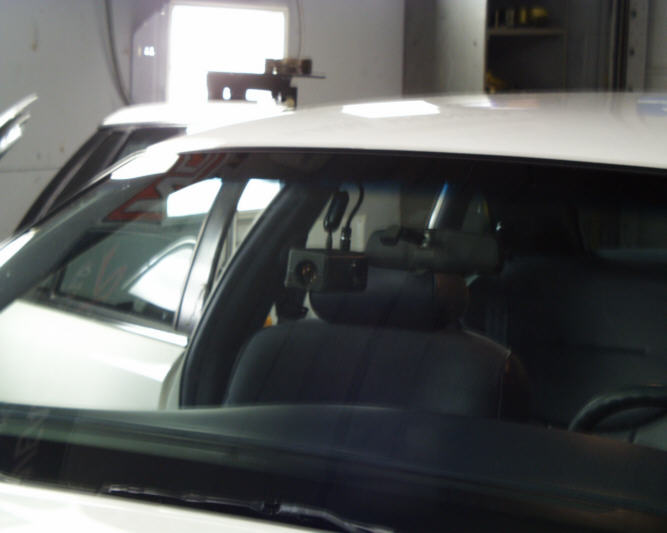
Booking and cruiser videos can be extremely useful for a variety of reasons. They can reveal that you were not as drunk as the police said you were or otherwise undercut the officer’s version of the facts. They can expose flaws in your arrest experience and the administration of field sobriety tests and breathalyzers.
During the booking process, the booking officer asks a series of background questions. The suspect will be fingerprinted, and a photograph will be taken. As such, booking videos often reveal a respectful and perhaps frightened and confused person with whom a jury could readily sympathize.
As many Massachusetts police departments are now using video cameras and taping these events, it is critical for an attorney to determine whether video evidence is available and carefully review all video evidence. Under the Massachusetts Rules of Criminal Procedure, exculpatory videos must be automatically produced. Some prosecutors, however, may not realize their duty to produce booking tapes, so it is important to have an attorney who will ensure that these videos are preserved and produced.
Chestnut Hill Man Arrested for OUI After Narrowly Avoiding Crash With Police Officer
 A recent article about a drunk driver found in Brookline caught my eye as a Massachusetts OUI criminal defense attorney. Wicked Local Brookline reported Nov. 15 about the arrest of Jason Andrew Jeffrey, 32, for drunk driving. Jeffrey was arrested after he narrowly avoided crashing into a Brookline police officer at 3:15 a.m. on the morning of Nov. 14. The officer was passing the Reservoir MTBA station, when he heard a woman screaming and saw another vehicle speeding directly toward his police cruiser at high speed. The officer said he feared for his life as he braked hard and steered to the right to avoid the car. The other driver swerved to the left, narrowly avoiding the police cruiser.
When the car pulled into the MTBA station’s parking lot, the officer pulled in front of the driveway to prevent the driver from leaving. He discovered Jeffrey in the driver’s seat and an unidentified woman in the passenger seat. The woman, who was the owner of the car, apologized profusely while Jeffrey said nothing. Before being asked, Jeffrey declined to take field sobriety tests. He later changed his mind and attempted to take the tests, but the officer said he could not complete them. He also did not have a driver’s license. He was arrested on multiple counts including OUI, driving without a license, driving on the wrong side of the road and driving to endanger. He also had an outstanding warrant for an offense the article did not specify.
Read article: Alleged drunk driver causes Brookline officer ‘to fear for my life’
This article describes behavior that is unlikely to go over well in public, and Jeffrey would be well advised to hire a Massachusetts drunk driving criminal defense lawyer. But as an OUI attorney myself, I’d like to point out that Jeffrey was actually within his rights to decline the field sobriety tests, and in fact may have benefited from not attempting them. As I’ve written here many times before, field sobriety tests are not reliable indicators of whether a driver is actually intoxicated. There are just too many ways for health problems, weather conditions, road maintenance and many other factors to interfere. In fact, the Massachusetts Supreme Court has ruled that one of the tests — the horizontal gaze nystagmus, in which drivers follow a finger or pen with their eyes — is not admissible as evidence unless it’s administered by a qualified person. This more or less eliminates it as evidence for an OUI. The federal Department of Transportation has also handed down reliability guidelines for field sobriety tests, which can be used in court to discredit tests that don’t meet standards.
Perhaps even more importantly for Massachusetts drivers, the state Supreme Court has also ruled that prosecutors can’t use your refusal to perform field sobriety tests as evidence against you. This means there are no direct consequences for declining field sobriety tests, as Jeffrey originally did. Now, this is not to say that declining is always the right choice. For one thing, drivers who don’t want to perform field sobriety tests should say so more politely than Jeffrey did, because making a police officer angry is unlikely to benefit them. And if you believe you can perform the tests without a problem, you should consider performing them. After all, performing the tests well may convince the officer that you’re not drunk, allowing you to end the traffic stop and move on with your day. But if you don’t feel that you’re likely to pass them, for any reason, you should know that you have the option of declining without having it brought up in court later.
Never Plead Guilty Based on Field Sobriety Tests That Use Faulty Science
 Police officers rely heavily on field sobriety tests when they suspect a driver of being intoxicated. Unfortunately, as a Massachusetts drunk driving defense attorney, I know that there are serious problems with these tests, and I use those problems as an element of my clients’ defense whenever appropriate. The appeal of field sobriety tests is clear: Drunk driving is dangerous and law enforcement agencies need easy-to-use, scientifically and legally valid ways of identifying drunkenness. Unfortunately, the field sobriety tests that are most commonly used in Massachusetts aren’t as reliable as they should be, and may not be administered properly. This means that completely innocent drivers who haven’t even had one drink can sometimes be arrested for driving under the influence of alcohol.
The National Highway Traffic Safety Administration (NHTSA) recommends three specific field sobriety tests — the horizontal gaze nystagmus test, the walk-and-turn test, and the one-leg-stand — as the most reliable ones for police officers to use. The NHTSA says that police officers who use all three tests on a suspected drunk driver have a 91% chance of making the right call as to whether or not the driver is actually drunk. In what the NHTSA views as the most accurate one, the horizontal gaze nystagmus test (or “jerking eyeball test”), a police officer asks a driver to follow a small flashlight side to side with his or her eyes. If the driver is drunk, his or her eyeballs shake as they look to the side. The walk-and-turn test is similar to walking a balance beam back and forth on a straight line. And the one-leg stand involves perhaps the greatest physical challenge of the three: drivers are asked to stand still with their arms at their sides, raise one leg six inches off the ground while keeping it straight and pointing at their toes, looking at their raised toes, and count forward from 1,001. Swaying, raising arms for balance, hopping, putting the foot down, or starting to count before the police officer tells them to can all be viewed as signs of drunkenness.
Several years ago, the Washington Post ran an article about the faulty science behind these tests that I found fascinating, as a Massachusetts OUI defense lawyer. The scientific basis of field sobriety tests lies in a 33-year-old study of how well field sobriety tests could identify blood alcohol content. That study was conducted with 238 subjects, mostly men 22-29 years old, and no control group. As the article sums up, “So hundreds of thousands of drivers have been arrested — no doubt many deservedly so — on the basis of a 30-year-old study that, critics argue, has never been published in a peer-reviewed, scientific journal, never tested on a large scale with a control group and, perhaps more astonishing, has nothing to do with actual impairment from alcohol.”
Besides the tests’ scientific faultiness, they can also falsely identify as drunk people who just have medical issues. Balance disorders affect 40% of Americans at some point in their lives, and dizziness and vertigo are the third leading cause for visits to doctors. The older you get, and the heavier you get, the worse your balance. For an aging population with a growing number of overweight and obese people, the one-leg stand test sounds like a pretty ineffective gauge of whether someone is drunk.
This is why it’s important for anyone facing OUI charges to contact a Massachusetts intoxicated driving criminal defense lawyer immediately. Experienced OUI defense attorneys know how to legally challenge unreliable field sobriety tests and get that evidence thrown out, which can get the charges dismissed or help win a not-guilty verdict. Anyone accused of a crime with serious penalties like OUI should avail themselves of the expertise of a criminal defense lawyer like Stephen Neyman.
Beware of Caffeine: It Can Raise Your Chances of a Drunk Driving Arrest
In recent months, there have been a number of reports warning the public not to consume caffeinated energy drinks with alcohol, like Red Bull with vodka. For example, this study reported on a CNN blog June 8 showed that student athletes were more likely to binge-drink if they mixed the alcohol with caffeine. In fact, the Scottish arm of the UK’s Labour Party is considering a ban on alcoholic drinks with a certain percentage of caffeine. Studies have indicated that people consuming caffeine with alcohol feel less drunk even though they actually are often more drunk than people who have been drinking alcohol without caffeine. This is because as alcohol is metabolized, it reduces glucose available to the brain, which makes you feel tired. But when caffeine is added to the mix, it masks the tiredness with its stimulant properties, so people don’t recognize how drunk they are.
However, as a Massachusetts intoxicated driving defense lawyer, I was fascinated to read that studies have also shown that caffeine can have a “synergistic” effect with alcohol. British researchers reported in “Interactions of Alcohol and Caffeine on Human Reaction Time,” Aviation, Space and Environmental Medicine 528 (June 1983), that “Caffeine has a synergistic interaction with alcohol…(It) has the effect of potentiating the detrimental effects already induced by alcohol….Motor skills which involve delicate muscular coordination and accurate timing have been found to be adversely affected by caffeine.” That means caffeine can increase the symptoms of alcohol intoxication — not counteract them, mask them, or help you to “sober up.” In essence, it makes people seem more drunk than they really are.
This is important for a Massachusetts OUI defense attorney like me to know about, because it could provide an avenue of defense for clients charged with intoxicated driving. For someone pulled over by the police for drunk driving, this means that their performance on a field sobriety test could perform worse than they would have without the caffeine. The caffeine would make them shakier and less able to perform the field sobriety tests than the alcohol alone would have left them. Field sobriety tests are supposed to provide evidence of whether a person is intoxicated, by demonstrating whether they can perform tasks such as “walk-and-turn”, “finger-to-nose” and “one-leg-stand.” These tests are not always possible for people who are haven’t even consumed any alcohol to perform perfectly, so the tests’ accuracy is less than ideal. For example, the test results can be affected by a person’s age, weight, athletic ability, emotional state, fatigue, and lack of familiarity with the tests. They can also be affected by conditions including passing traffic and by the police officer’s communication skills. With the addition of caffeine, the test results could make the person appear to be drunker than he or she really was, and the person would be more likely to get arrested.
Drivers Should Be Aware of Sobriety Checkpoints as Holidays Draw Near
The holidays are upon us — and with them come a lot of parties and family gatherings that offer opportunities to drink. Police agencies are very aware of drunk driving during the holidays, and they tend to step up their enforcement efforts on the days they believe people are most likely to drive drunk. In fact, according to a Nov. 6 article in the Woburn Advocate, the Massachusetts state police have already started. In that article, they announced a sobriety roadblock in Middlesex County on Friday, Nov. 13 and Saturday, Nov. 14.
In my experience as a Massachusetts OUI defense attorney, drivers can expect to see more of these roadblocks, particularly on the nights before and after major holidays. That’s why I would like to take a moment to explain the rights of Massachusetts motorists caught in a sobriety checkpoint. A sobriety checkpoint is essentially a roadblock in which law enforcement stops motorists to check them for signs of impairment by alcohol or drugs. It is completely legal for law enforcement to stop every driver, regardless of whether there’s evidence of intoxication, and detain them briefly. However, roadblocks in Massachusetts must be conducted according to guidelines created by the Massachusetts Secretary of Public Safety and in accordance with Massachusetts case law and state and federal constitutional guidelines. If the police fail to adhere to those guidelines, the entire stop and all of the evidence it produced may be thrown out of court, ending any drunk driving prosecution.
It’s also important for drivers to realize that all of their civil rights still apply at a sobriety checkpoint. Drivers must provide license and registration, but they are under no obligation to answer extra questions about where they’ve been, where they’re going or whether they were drinking. They also have the right to decline to allow a search of the vehicle. Police cannot search a vehicle without your permission unless they have probable cause. Drivers can legally decline to perform field sobriety tests and may also decline a breath test, although they will face an automatic license suspension if they do so. However, it’s important to decline all of these things as politely as possible, because bad blood with law enforcement officers can result in being unreasonably verbally abused, detained or arrested. An experienced Massachusetts drunk driving defense lawyer can help clients have unreasonable, illegal charges dismissed — but not before an arrest, night in jail and other unpleasant personal and financial consequences.